 Mushroom Matter
sharing mushroom news with care
Mushroom Matter
sharing mushroom news with care
Menubar















Mushroom Matter
Welcome on our platform. Why MUSHROOM MATTER? Because mushrooms play an important role in our lives as well in business. Our goal is to bring the world the very latest mushroom news with the upmost care to support the positioning of our beloved Mushroom.

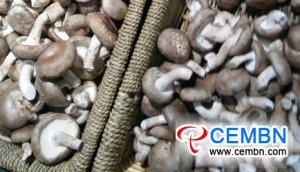
According to mushroom quotation provided by Liaoning Dandong Vegetable Wholesale Market, on July 8, Shiitake mushroom, Superior Shiitake mushroom, Button mushroom and Agrocybe cylindracea are 4 varieties that show price fall.
1. Price of Shiitake mushroom has dropped from 10 to 8 CNY per kg, indicating 20% of decline range.
2. Price of Superior Shiitake mushroom has dropped from 14 to 12 CNY per kg, indicating 14% of decline range.
3. Price of Button mushroom has dropped from 18 to 16 CNY per kg, indicating 11% of decline range.
4. Price of Agrocybe cylindracea has dropped from 14 to 12 CNY per kg, indicating 14% of decline range.
On the contrary, on July 8, Oyster mushroom, King oyster mushroom, Enoki mushroom and Cordyceps militaris are 4 varieties that show price rise.
1. Price of Oyster mushroom has risen from 8 to 16 CNY per kg, indicating 100% of increase range.
2. Price of King oyster mushroom has risen from 6.5 to 7 CNY per kg, indicating 7% of increase range.
3. Price of Enoki mushroom has risen from 4 to 4.5 CNY per kg, indicating 12% of increase range.
4. Price of Cordyceps militaris has risen from 14 to 16 CNY per kg, indicating 14% of increase range.
“Price of White beech mushroom and Brown Shimeji mushroom is respectively at 8.3 and 8.33 CNY per kg in our market,” introduces general manager of Liaoning Dandong Vegetable Wholesale Market passionately.
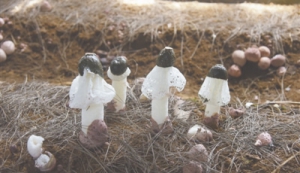
By growing Bamboo fungi in 550 mu of area, the base creates the gross incomes of over 42 million CNY
On July 7, in mushroom base located in Xiongjiachang Town, Bijie City, Guizhou Province of China, Bamboo fungi cultivated in 550 mu of area are in picking season, growers are busy with picking, management and drying work.
“According to the estimation, this year, output of fresh Bamboo fungus could reach at least 500,000 kg, in accordance with the proportion of 7 to 1, the expected output on dried Bamboo fungus totals 7000 kg. To calculate by the present market price of 600 CNY per kg on dried products, the projected gross incomes could come to over 42 million CNY by 2020,” introduces Mr. Yang Tianhong, person in charge of the base warmly, going on that each day, the base organizes nearly 50 farmers to grow and manage Bamboo fungus, and they can get the per capita incomes of 300 CNY per day.
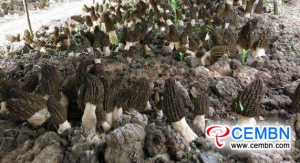
Morel mushrooms are packed with unique fragrance, complete functions and evident effect to food therapy. This kind of mushroom holds the efficacy of tonifying kidney and brain, refreshing while it shows good auxiliary therapeutic effects on dizziness insomnia, weakness of the spleen and the stomach, indigestion and poor appetite. Besides, Morel mushroom also helps prevent and fight with cancer, ward off colds, enhance the immune system and hence it medically shows crucial development value.
Now, in China, market price of dried Morel mushroom is at 1600-2000 CNY per kg. In western European countries, Morels are extremely in tight supply and high price.
Unlike other mushrooms, Morel mushrooms hold poor adaptability, and poor stability in the case of alien cultivation. Therefore, strains isolated by local Morel variety match local surrounding, eliminate the regional differences and influences resulted from long-distance purchasing or the course of mailing.
Wild Morels could be largely foraged during March to May after the rain while they occasionally pop in during August to September in small quantities.
Morel mushrooms hold long growth period, apart from low temperature, they also require large temperature difference that stimulates the differentiation of mycelia.
When water content of soil is lower than 40%, growth of Morel mushroom would be affected. As fruiting bodies substantially occur, relative air humidity in forest is at 80% and general water content of soil is at a range of 40%-50%. Besides, suitable PH Value that fits for growth of Morel mushroom is 7-8, weak scattered light also impels the growth of fruiting bodies.
However, strong direct sunlight does adverse impact to the growth of More;s. In early spring, growers could timely spray water in dry circumstance, and keep soil moist, or growth of fruiting bodies would be restricted. In a word, in early spring, temperature and humidity of growing environment are key elements that guarantee the success of Morels cultivation.
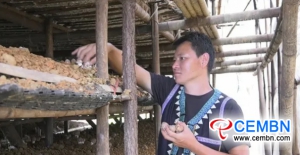
On July 3, Brazil mushrooms farmed in mushroom base of Nanyou Village, Malipo County, Yunnan Province of China are evolving into the maturation, growers are busy with mushroom picking, sorting, drying and marketing.
“Brazil mushroom farming is short in cultivation period, from the formal cultivation to marketing, Brazil mushrooms only take 60 days or so. Now, it is the GOLDEN picking season of Brazil mushroom, in each shed, daily picking volume could reach 1500 kg or so, for growers like us, daily net incomes could come to over 10,000 CNY,” introduces one of local mushroom growers passionately, going on that by 2020, 10-12 flushes of Brazil mushroom are expected to be realized and cultivated, the anticipated gross output attains at least 312 tons while the projected annual output value hits 2.8 million CNY in Nanyou Village.
On July 1, in mushroom house built by Shandong Huarong Mushroom Cooperative, Button mushrooms are showing satisfactory growth tendency, growers are orderly engaged with mushroom picking.
“Now, our cooperative absorbs 60 high-standard and thermostatic mushroom houses which totally output 2000 tons of Button mushroom each year, products are mainly supplied to Beijing and other cities in China,” said manager of the cooperative.
Over the years, Wucheng County of Shandong Province keeps on relying on its advantages, and greatly strengthens mushroom industry. Up to now, over 20 cooperatives have been built in the county, area for mushroom cultivation totals over 7 million square meters, annual mushroom output reaches 86,000 tons while output value hits 660 million CNY.
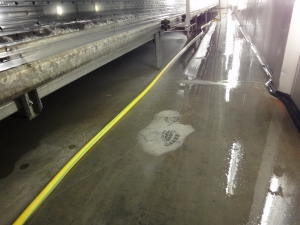
Floor humidity
If you want to maintain a natural climate in the growing room during the recovery period until about five days after ventilation you should water the floor and walls of the growing room. Do this at intervals of between one and six hours. You will notice the result as a shock effect in the graph displaying the RH and growing room temperature. I will explain what is actually happening and how to avoid a shock effect.
The effects of floor humidity
If you stand in the growing room while the watering system is wetting the floors and walls you will see several things happening. The watering system contains nozzles which moisten the floors and walls with water droplets and it also creates tiny, airborne droplets of water. If you shine a torch you will see the little water droplets floating in the air. Eventually the droplets fall onto the beds and the sensors of the climate computer. This has two disadvantages:
1. Climate disruption
The water droplets which fall on the sensors are cold. They disrupt the climate, which causes a response from the computer. The effect is minimal but your aim is to keep the climate as constant as possible. This uses the least energy.
2. Abnormalities
The water droplets fall on the beds where the mycelium is recovering. These water droplets disrupt pinning, resulting in cluster-shaped abnormalities which develop before the first flush.
How can you prevent this?
Make sure that there is sufficient water pressure (see photo) while the floors and walls are being wetted. In this way you prevent the droplets from floating in the air. In addition, make sure that the whole floor is wet. This approach means that the floors dry out less quickly, ensuring that the climate in the growing room is more uniform and favourable for growth.
Mark den Ouden
Next courses:
Live training Mushroom Signals Essentials: 12 – 16 October 2020
The e-learning course offers the theorical knowledge of the Mushroom Signals book that is necessary for the live training sessions. During live training, all participants have the same basic knowledge, so there is plenty of time to deal with individual questions. This is not only valuable for the participant but sharing knowledge between the trainer and the other participants makes the theory more relevant. The everyday practice at the composting facility and the mushroom farm of the participants will also be discussed.
Other courses in 2020: 30 November – 4 December 2020.
Always available:
E-course Mushroom Signals Essentials
More info about the course see www.mushroomoffice.com
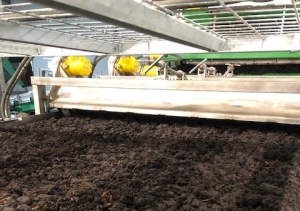
Importance of filling
Many times when I see growing operations I got questions on how to get improvements and many times it always comes back to the way the room is filled. When at filling there is not enough knowledge or attention to details it will affect the rest of the growing cycle. Lets highlight some of those details.
The amount of caccing is very important to get an even growth of the mycelium into all the room but is not so easy as it sounds. Only when the compost layer comes perfectly even out of the head filling machine before the casing falls on top it is possible to get the job done with the first spinner on the machine, the spinner that is used to get caccing in the casing and spread the casing evenly. In many occasions I don’t see the even compost layer and therefore we have to go back to the other side of the machine to see what is causing the problem. It can be an uneven supply of the compost, the swivel belt timing or not enough and uneven compression. Makes sure to solve that before setting the caccing depth. Also, make sure to get an even amount of supply into the casing hopper, if not too much casing will get pushed through on moments cause more casing on those spots, so an uneven caccing there. Depending on the structure of the casing and the desired structure you can adjust the speed of the spinner to get the right result.
After the first spinner there is the next spinner with the purpose of leveling the casing. Depending on the structure of the casing adjust the speed again and make sure to set the spinner not too deep. When that spinner goes to deep and there will built up more casing behind the spinner what will happen is that it will throw casing over the spinner causing an uneven casing layer. The casing layer should have the right and even level required after the spinner before it goes under the press at the end.
Use the press for the final touch, press the casing slightly at the end of the machine, just enough to push down the last loose casing on the top but not so much that it causes anaerobic spots on top. If the level is not good enough with the 2nd spinner, the press will press too much casing and just causing anaerobic spots of casing on top of the beds where no mycelium will grow in. Minimize that as much as possible.
Setting the machine in the morning is very important. I would always start the machine on the 2nd shelf, set it up as required and try not to change too much during the rest of the room. The most critical in that is to set the right compost height in the morning to avoid too many changes. Of course we always need to adjust if necessary but make sure then to minimize the changes and if you have to adjust, adjust all the settings. A change of compost height might change the compost press, height of the spinners and casing press roll. In practice that gets forgotten and causing a different fill after the compost height is changed.
A good filling is a head start of every growing room. I just highlighted a few details that need attention but there are many more of course. It’s not so easy to get the room filled exactly as required but good training and of course good equipment will get the job done and make the rest of the cycle easier to get the maximum result.
Erik de Groot
This email address is being protected from spambots. You need JavaScript enabled to view it.







