 Mushroom Matter
sharing mushroom news with care
Mushroom Matter
sharing mushroom news with care
Menubar














The opening of Ribbstyle India Gujarat
The opening of our new branch in Gujarat, India, is a wonderful moment for RibbStyle. Owner Martijn Meeuwse was present to officially open the doors together with the team.
The new office demonstrates what we stand for: working close to our partners and customers, with room for innovation, quality, and collaboration. During the visit, there was an energetic atmosphere, with a team ready to build the next steps together.
Moreover, Gujarat is an important region for the mushroom industry, a sector in which RibbStyle has been active for many years. Our specialized coatings are used worldwide to ensure hygienic, safe, and easy-to-clean cultivation environments. From Gujarat, we can support growers and suppliers in this fast-growing market even better with knowledge, service, and products tailored to local conditions.
With this location, we are taking a solid step forward. From our new branch, we can capitalize even better on opportunities in the region and continue to grow, develop, and create, together with the mushroom sector and other industries that require sustainable, reliable coatings.
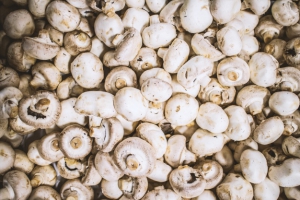
The hands that grew a brew are now raising fungus for survival in northern West Bengal. Sabitri Toppo and Mausumi Minj are among 700 plantation workers who lost their jobs when the Madhu Tea Estate in West Bengal’s Alipurduar district.
The tea estate is one of 26 in the district’s Kalchini block, many of them in a bad shape due to low yield, quality and labour issues.
“We formed a cluster of women from 50 families, some of them from the closed tea estate, and trained them in organic mushroom farming more than a fortnight ago. We also provided them a permanent mushroom-growing shed and home-delivered spawn,” Binoy Dhar, a farm specialist with the Assam-based Mushroom Development Foundation (MDF) told The Hindu from the Kalchini area.
Please read the full article here.
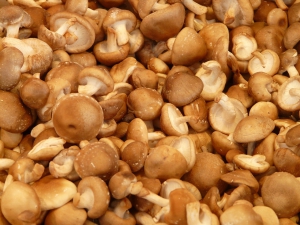
Scientists to help Sikkim farmers grow ‘Rs 3,000/kg’ mushroom variety with enhanced Vitamin D
CSIR scientists say three food-processing cluster centres will be set up in Sikkim, each cluster likely to empower 250 households by providing them additional income.`
New Delhi: Scientists at the Council of Scientific and Industrial Research (CSIR) have started a project that will allow farmers in Sikkim to earn additional income by cultivating Vitamin D-enriched shiitake, a mushroom native to East Asia.
The fragrant, large umbrella mushroom is mostly used in Japanese cuisine, but is becoming increasingly popular in India. The mushrooms are expensive because they grow in very specific conditions on logs of fallen trees. Although shiitake is cultivated in north-east India at present, researchers at CSIR-IHBT have created a new technology that allows these mushrooms to grow in controlled lab conditions much faster.
According to Rakshak Kumar Acharya, a microbiologist at IHBT, Palampur, the technology had been earlier transferred to a number of private companies in India.
“In Delhi markets, it is sold at 3,000 per kg. Rates are very high compared to other mushrooms. This is because it has a very good smoky and meaty flavour,” he told ThePrint.
Three food-processing cluster centres are being set up in Sikkim in collaboration with the Ministry of Micro, Small and Medium Enterprises. Apart from facilities to grow the mushrooms, the centre will also have processing and packaging facilities. The government has allocated Rs 2.34 crore for each of the three cluster centres, and the foundation stone for the first centre was laid down on 29 January.
Enhancing Vitamin D content
The team at CSIR-IHBT has also created a process to enhance the Vitamin D content in these mushrooms in the lab.
According to the researchers, each cluster is likely to empower 250 households by providing additional income.
Credits and source of this article: The Print
For the complete article, click here





