 Mushroom Matter
sharing mushroom news with care
Mushroom Matter
sharing mushroom news with care
Menubar










GrowTime at NAMC 2026 in Montreal – innovations that boost efficiency and profitability
From June 4–6, 2026, Montreal will host the 27th edition of the North American Mushroom Conference — one of the most important events for the mushroom industry in North America. The conference brings together growers, experts, and industry leaders to exchange knowledge and discover the latest technologies supporting modern mushroom cultivation.
We are proud to announce that GrowTime will also be among the exhibitors, showcasing its solutions for professional mushroom farms. At our booth, visitors will have the opportunity to see our modern mushroom harvesting trolleys and innovative technologies designed to improve efficiency and working comfort. It will be a great chance to explore our products up close, meet the GrowTime team, and connect with mushroom industry professionals from around the world.
If you are interested in the future of modern mushroom production, this is an event you should not miss. And that’s not all… GrowTime has just entered a new market and expanded into another country. More details will be announced soon!
More about our presence at the conference here: GrowTime at NAMC 2026 in Montreal
In a previous edition of Mushroom Matter Industry Insights, we highlighted a shift towards more pragmatic and integrated approaches to technology in the mushroom sector.
In this edition, we take a closer look at three developments that are gaining momentum across the industry:
- data-driven mushroom farming
- energy efficiency strategies
- the next generation of harvesting robotics
Together, these topics show how the sector is moving towards smarter, more efficient and future-proof production systems.
From intuition to data-driven growing
Mushroom cultivation has always relied heavily on experience and intuition. Skilled growers understand their crops by observing subtle changes in growth, climate and timing.
What is changing today is not the importance of that experience, but how it is supported.
Sensor technology and data platforms are increasingly being used to monitor:
- temperature and humidity at multiple levels
- CO₂ concentrations
- airflow and microclimate differences within growing rooms
- growth patterns across flushes
This allows growers to move from reactive adjustments to more predictive decision-making.
Instead of asking what is happening now?, the question becomes:
what is likely to happen next and how can we anticipate it?
Artificial intelligence and data models are slowly entering the sector, but their role is still supportive rather than leading. The real value lies in combining data insights with grower expertise.
The farms that benefit most are not those with the most data, but those that know how to use it in a practical way.
Energy efficiency as a strategic priority
Energy has become one of the most critical cost factors in mushroom production.
Climate control, ventilation, cooling and heating all require significant energy input, making efficiency a key focus area for growers.
Across the sector, several strategies are emerging:
- optimising climate recipes to reduce unnecessary energy us
- improving insulation and air handling system
- recovering and reusing heat where possible
- exploring alternative energy sources
What stands out is that energy efficiency is no longer treated as a standalone project.
It is increasingly integrated into overall farm strategy, where climate control, yield optimisation and cost management are closely linked.
For example, small adjustments in climate settings can reduce energy consumption while maintaining — or even improving — product quality.
This makes energy efficiency not just a sustainability measure, but a direct driver of profitability.
The next generation of harvesting robotics
Robotics continues to be one of the most visible areas of innovation in the mushroom sector.
However, the narrative is shifting.
Where earlier developments focused on full automation, the current generation of harvesting robotics is becoming more refined, adaptive and realistic in its application.
Key improvements include:
- better vision systems for detecting size, maturity and position
- more precise picking mechanisms
- improved ability to handle variability within flushes
At the same time, expectations are becoming more grounded.
Fully autonomous harvesting remains complex due to the biological variability of mushrooms. As a result, many solutions are designed to operate within hybrid systems, supporting human pickers rather than replacing them entirely.
Robotics is increasingly seen as:
- a way to stabilise capacity
- a tool to reduce physical strain
- a solution for specific bottlenecks in the harvesting process
The question is no longer can robots replace people?, but
where do robots add the most value within the process?
Connecting the dots
What links these three developments is a common direction: smarter integration.
- Data helps growers make better decisions
- Energy strategies improve efficiency and sustainability
- Robotics supports labour and stabilises operations
None of these developments stand on their own.
Their real impact emerges when they are combined into a coherent production strategy.
This reflects a broader shift within the industry, from isolated innovation to integrated optimisation.
A realistic path forward
The mushroom sector is not moving towards a fully automated future overnight.
Instead, it is building a more balanced model, where:
- technology supports biology
- data supports decision-making
- automation supports people
This approach may be less visible than bold innovation headlines, but it is far more effective in practice.
Looking ahead
As these developments continue to evolve, the focus will remain on practical implementation and real-world impact.
In the next edition of Mushroom Matter Industry Insights, we will explore several additional developments shaping the sector, including:
- labour strategy and workforce sustainability in mushroom production
- shifting market demand and the role of specialty mushrooms
- collaboration across the value chain
These topics continue the conversation about how the industry is adapting, not only through technology, but also through people, positioning and partnerships.
Published by Mushroom Matter: connecting the global mushroom community through insight, innovation, and inspiration
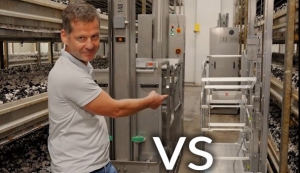
GrowTime’s Newton and Pascal harvesting lorries offer mushroom farms reliable, durable tools that boost efficiency and reduce maintenance.
At GrowTime, we've compared our two top models – Newton and Pascal – to help you decide.
The Newton model is lightweight and budget-friendly, ideal for farms with narrow aisles and tight spaces.
The Pascal is built for larger farms and heavier loads, offering extra comfort and performance in more demanding conditions.
So whether you prioritize flexibility in narrow aisles or need a heavy-duty solution for larger farms, we've got you covered.
Want to see how they differ in action?
Watch the video here and decide which one will be the best fit for your mushroom farm!

Renewable and sustainable energy reviews
Sustainable agriculture holds a key role in attaining a balanced approach to increase productivity, especially for growing industries like mushroom production.
Producers like China, the USA, and the UK lead the race for global mushroom production, while India lags with 0.18 million tonnes of output. However, ensuring the sustainability of the mushroom industry is needed for environmental conservation, long-term economic viability, and the overall well-being of communities dependent on this agricultural sector. This review focuses on the recent trends in waste and carbon footprint generation from the mushroom industry, emphasizing spent mushroom substrate and utilities like electricity.
Moreover, this review extensively covers recent advancements in research concerning incorporating innovative technologies such as AI and precision agricultural technologies like Internet-of-Things (IoT) and big data and contemporary approaches, such as solar energy in mushroom farming. The challenges the mushroom industry faces, and policies to tackle them and promote sustainable agriculture are also thoroughly explored. The review concludes that the carbon footprint generation and waste release from mushroom production can be mitigated using AI, IoT, big data, machine learning, integrated sensors, etc., by increasing production efficiency and optimizing processes.
Conventions such as circular economy, conventional energy substitution, carbon credit, and carbon capturing can also alleviate carbon emissions and carbon footprint. Therefore, this will allow the mushroom industry to align with Sustainable Development Goals 7 (affordable and clean energy) and 13 (climate action). Moreover, there is an urgent need to refine the schemes and provisions to make mushroom cultivation a sustainable agricultural sector.
Read the full article here on Science Direct.
'As a mushroom sector to solve our own problems'
From the production of healthy food to attention to animal and plant health, from managing a beautiful and diverse landscape to contributing to a healthy economy: Limburg's farmers and horticulturists literally keep the province healthy. Today a conversation with entrepreneur Gerard Sikes from Ysselsteyn, who is well on his way to climate-neutral mushroom production.
Sikes (49) grew up on an arable farm, his wife Karin (49) on a mushroom farm. In 1988 they started cultivating mushrooms together.
'A nursery was for sale, but we could also have bought a sandwich shop or opened a bicycle shop,' says Sikes. 'What matters to us is doing business together.'
Every morning, around eight o'clock, the couple sits together at the table to discuss all current matters and the day ahead. 'A healthy relationship is the basis for our company. My wife gives feedback, is my complaint and teacher.'
Source: Nieuw Oogst (article is in Dutch)
The influence of straw on your composting process
Straw, horse manure and hay are the raw materials that have the most influence on the mushroom production process. Its structure affects the composting process. Its fibers (i.e. celluloses, hemicelluloses and lignin) are important carbon sources. The mycelium needs hemicelluloses and lignin for growth during the spawn run and case run phases (vegetative phase). In the so-called generative phase, from pin outgrow to mature mushrooms, celluloses and hemicelluloses are needed. Mushroom substrate has to undergo certain process steps. For the phase I composting process these are the so-called biological and chemical steps. During the phase II process the conversion of ammonia and the creation of selectivity make up the next step. During the phase III composting process the final step is mycelium development. Straw (or horse manure, hay) has a big impact on all these process steps.
Please read the full article on the website of ChampFood here
Article: by Geert Lemmers Composting Consultancy B.V.
Source: ChampFood





